In the Company of Corn

ThreeSisters
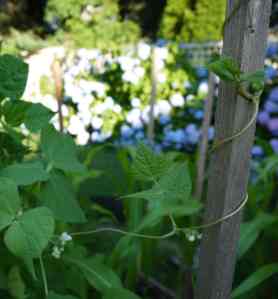
Last year’s attempt to emulate the Native American style of companion planting ended successfully for the corn, okay for the beans and not very well for the pumpkin.  (Yes, I mean we only got one pumpkin.)  In theory, the corn should support the vines, the beans should provide nitrogen and the pumpkins should crowd out the weeds.  That’s the theory, at least; my practice wasn’t perfect.

To improve on that newbie run, we did things a bit differently this year:

1) Planted the beans/pumpkins slightly later than the corn—about a week or so.  This gave the corn time to grow enough to shade the beans, which apparently don’t like too much sun.

2) Supported the beans on lightweight teepee-style trellises—DIY bamboo sticks tied with string.  The fancy cedar ones we used last season looked swell until the first hard rain loosened the soil and bam!  Down went the whole kit-and-caboodle on the teenaged corn.

3) Fenced early.  Plan to keep the barrier in place until harvest.  No sense in giving the varmints any advantages!

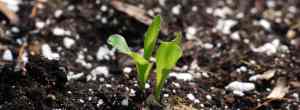
4) Staked the corn when necessary.  Those vine tendrils can pull down baby corn stalks just as effectively as a heavy downpour.  Maybe I need to plant the beans two weeks after the corn?

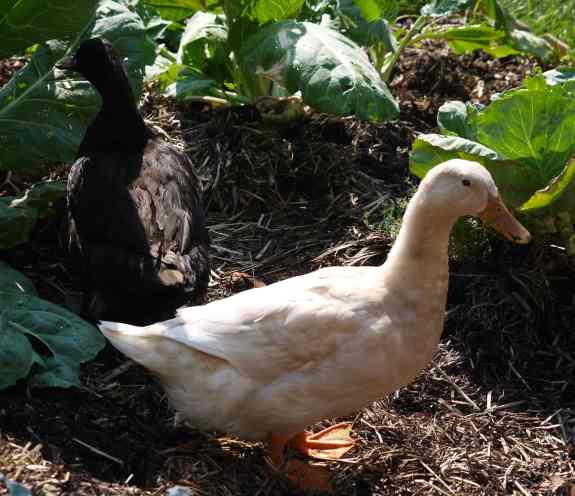
Meanwhile, the hot, wet weather seemed to be absolutely perfect for growing ornamental corn.  Lots of compost from the winter duck pen didn’t seem to hurt either so maybe you could put it this way:
The ducks went and now the corn goes.

If you wanted to be cheeky, that is.

😉


BeanVines

Copyright 2013, Lori Fontanes

Get Ducky!

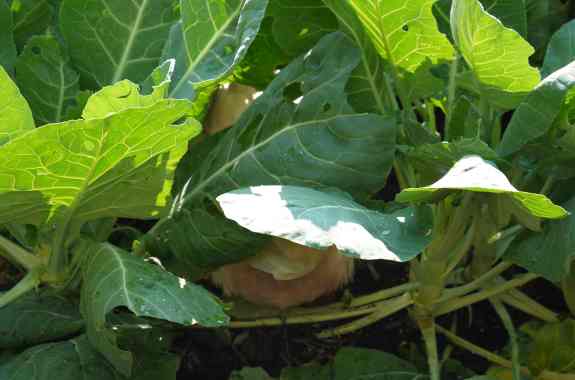
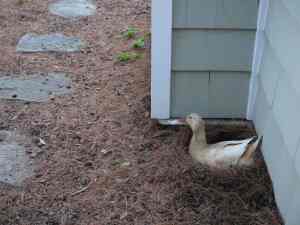
HidingDaft duck tries to hide in the collards.


PeepNestsHey, I was here first!


WhoUsCabbage patch ducks–collect ’em all!


Copyright 2013, Lori Fontanes

I’m Melting!

HooBoyHotQuick!  Someone throw another bucket of water!


Copyright 2013, Lori Fontanes

Mona Lulu

LuluSmile

What’s your secret?


NotTelling

Not telling.


Copyright 2013, Lori Fontanes

Nothing Succeeds Like Excess

SunnyCU

As What the Ducks! followers already know, I’m not a big fan of Big.*  And by Big what I (usually) mean is Big Systems—being basically leery of big explanations,** excuses, boxes, brothers, organizations, data and the unwieldy like.  What worries me is not Too Big To Fail but more like Too Little To Succeed.  Who gets lost in the speed and scale shuffle?  What gets trampled in this rush to gigantitude?  Who’s looking out for the little guy, the small business, the beginners, the youngest, the oldest, the weakest, the neediest?  What happens when you can’t get enough of what you need to grow?

Now don’t get me wrong.  Not all that’s big is bad (it’s good for linebackers– if not so good for jockeys) and not all that’s small is good (certain bacteria and chemicals come to mind).  It’s a question of right-sizedness, I think.  Not so much moderation (however helpful) but what makes sense for a given situation.  Figuring out the right size is much harder than merely pushing for bigness; it requires a sense of balance, compromise, information, experience, and humility.  So, forget that!  In a world where we’re always encouraged to grow our way out of every problem, right-sizing is just not in our playbook.  (Yet?)

That said, it’s completely different with vegetables.  (Well, mostly.  You can crowd plants to ill effect, too.  I rarely have that problem!)  To make a sweeping generalization, if someone plants only one seed and intends to get a bumper crop, they must either be an optimist or a fool.*** I mean, even Jack got a coupla magic beans in that seemingly ill-conceived trade.  (Talk about your buyer beware kinda market…)  (But he scored!)  (Yeah, but he almost got squashed by a giant!!)  (Yeah, but he scored!) (Right, he scored!)

Meanwhile, back in the real yard, those of us without magical powers need to maximize our chances against the forces of Big Mama Nature, whose minions include Varmints, Bugs, Bad Weather, and other capitalized menaces.  And, as in the fairy tale, we’re also required to use not only brawn (although brawn doesn’t hurt, especially when it comes to hauling bags of fertilizer!) but brains.  You gotta use some gray matter to constantly devise new ways to outpace the possum and restrict the raccoon or give up and go back to the box store for our all your eatin’ needs.

Considering the potential losses, the tried-and-true method for right-sizing your yield starts with planting too much (over-planting) then thinning out the excess.  In other words, planting big, making it smaller and hopefully ending up with just enough (wait, have we moved on to Goldilocks?)  Exactly how much you over-plant depends on the species– say, five pumpkin seeds per hill, two beans every four inches, a sprinkling of radishes around the cukes, etc.  Now some won’t even germinate, some may get eaten, some may wash away but once the seedlings are established, you pull out the weakest and leave room/nutrition for the hardiest.  Darwinian?  Yeah.  Successful?  You betcha!  It may seem wasteful but it works.  Your investment in time, labor and other inputs far outstrips the cost of a packet of seeds.

Of course, figuring out the best moment to pluck the extras and how much to take out isn’t easy at first.  There’s no rule I know that works for all types of veggies–you kinda have to assess the plant and its conditions.  In some cases, you won’t have to thin at all; sometimes you only get a few hardy ones and you coddle those babies like nobody’s business.  And, yup, this can be tricky (right-sizing always is) but if you follow the seed packet instructions and/or your mother’s advice, you can get a sense of best practices for any given plant, sometimes even the first time out.  In later seasons, you’ll add layers of hard-won failure experience on top of theory and further improve your outcomes.

Nevertheless, despite all the heavy mental and physical lifting, your well-tended garden may still be attacked by the dreaded Bad Luck Monster.  As they say in Scotland, best-laid schemes “gang aft agley” which means, loosely translated, no matter how smart you are, um, stuff happens.  But no use crying over spilt  beans!  When life takes away your lemons, there’s really only one thing to remember:

If at first you don’t succeed, plant, plant again.
 

BabyCornPlant


*Not including chocolate–or blog platforms!
**Like this one, natch.
*** Nothing wrong with Fools, mind.  Keepin’ us honest.


Reference:

“A First Treasury of Nursery Stories”; retold by Mary Hoffman; MacMillan Children’s Books; London, UK; 2000.


Copyright 2013, Lori Fontanes

Clouds Over Paris

Nuages3

Nuages4

Nuages1

Our hearts go out to all those affected by the accident at Bretigny-sur-Orge.

Copyright 2013, Lori Fontanes

Sacré Green!

GiantWateringCan
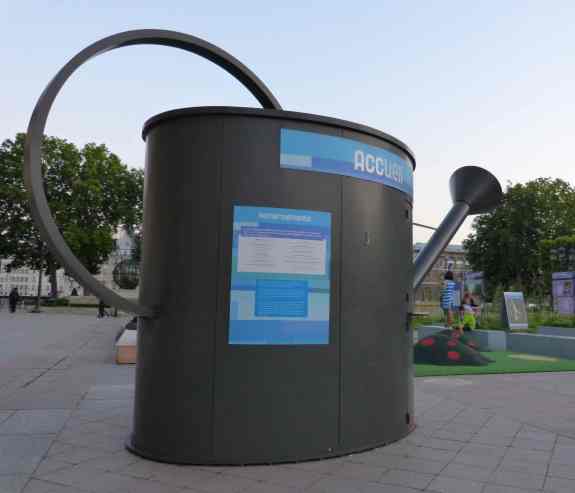
In France, the city of Paris has been going verte for some time, not only for overall planetary health but for the many immediate benefits to public well-being.  Over the years, Mayor Bertrand Delanoë has championed a variety of aggressive (and controversial) anti-pollution strategies; several have already been implemented.  These programs include the world-famous Vélib’ bike-share system and the redesign of the river embankments, just two of the many ways the French are promoting healthier communities.

This summer, my daughter and I visited one of their seasonal offerings, Le Jardin Ephemère (“The Ephemeral Garden”).  Installed on the square in front of Hötel de Ville (City Hall) and running but a few short weeks, tourists and citizens enjoy these charming patches of meadow temporarily “planted” on the flagstones.  As the name says, this garden is fleeting but the beauty of that limitation underscores the importance of remembering our own.


EphemeralGardenESTNotice the clock–it’s almost 10 o’clock at night!  Ah, Paris in July!


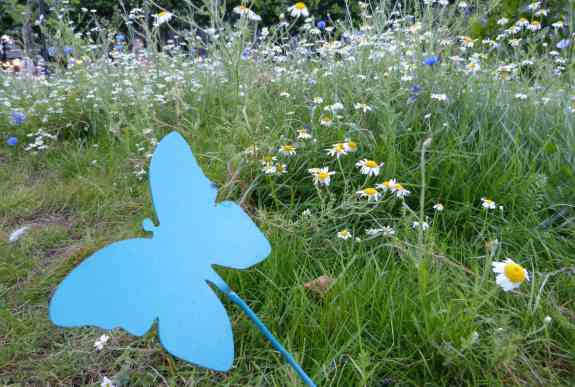
DetailJardinReal flowers, not-so-real butterfly!


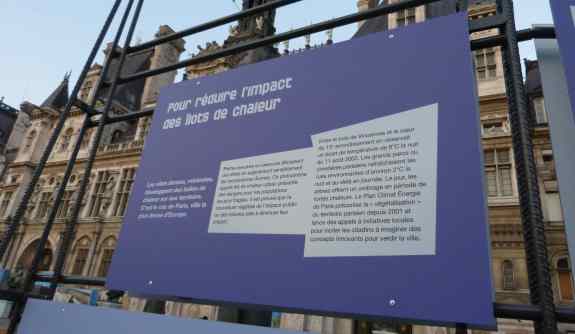
InfoSignInformational signs promoting green strategies.


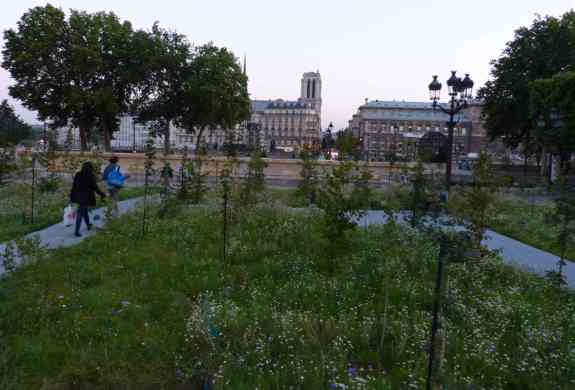
JardinVueView of the temporary park looking toward the Seine and Notre Dame.


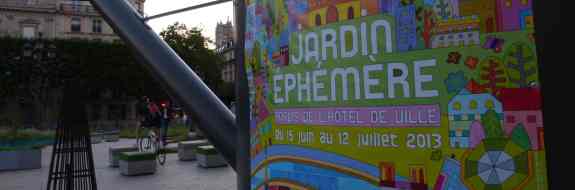
JardinSignLike the spring, this, too, has passed.  Maybe next year?

Copyright 2013, Lori Fontanes

To Bee or Yes to Bee

Bee1

Bee3

Bee4

Bee2

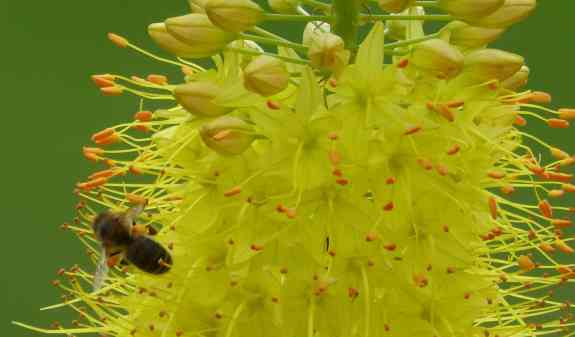
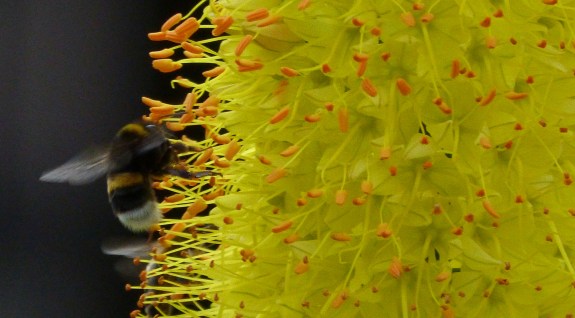
They haven’t had all that much sun in Paris this year but that hasn’t stopped the flowers–or the bees!  Thank goodness, too, because less pollination can mean less (and more expensive) food.  Something to keep in mind when considering what we put into our backyards, right?


NDgarden

Make honey while the sun sorta shines.


Note: According to a biodiversity exhibit at the Sevres-Babylone Metro station, due to the use of pesticides in the countryside, “paradoxically” bees can live better in cities.  For more on the 2010 Year of Biodiversity, see here and here.  For more on bees in Paris (in French) see here.


Copyright 2013, Lori Fontanes

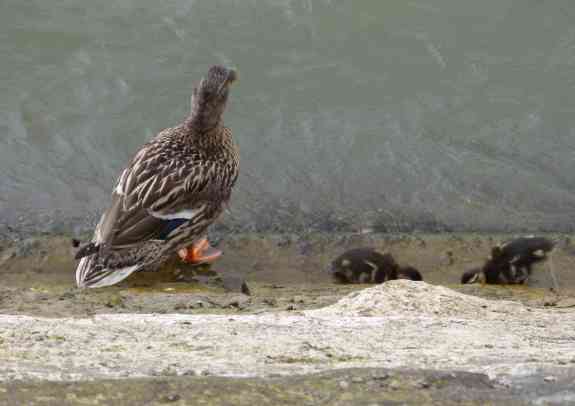
A Duckling Grows in Paris

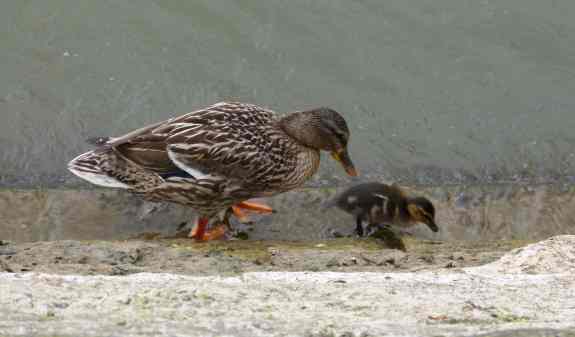
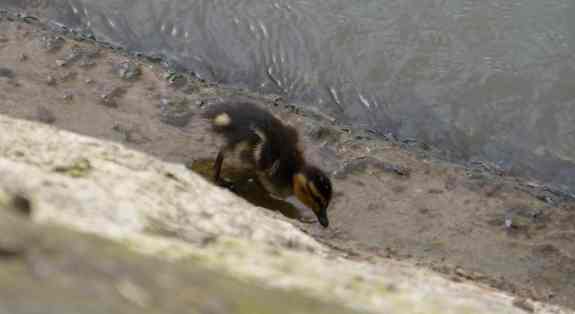
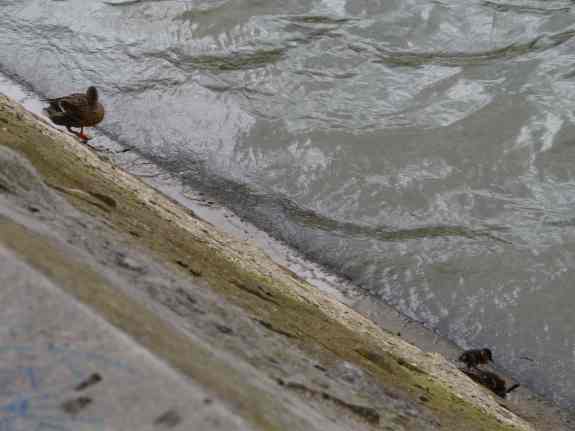
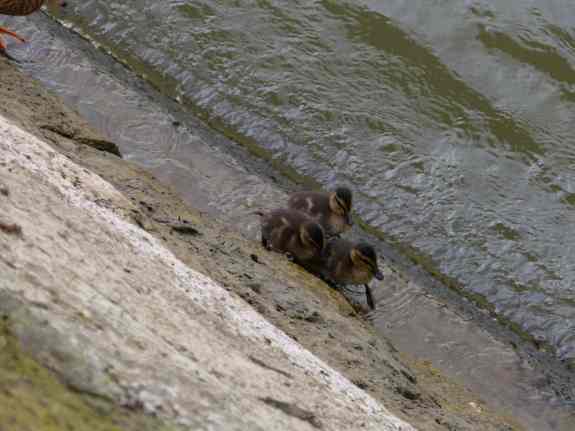
Mere+CanetteOn a girl getaway last month, my daughter and I spotted this adorable duckling and its siblings grazing for greens along the Seine.  Although le saumon haven’t returned full-force (yet?) in Parisian waters, there’s certainly lots of bird life.  Mère Canard keeps a close eye on her brood– a good idea in a town where canard definitely means “poultry” not “pet”.  Well, these cuties certainly had nothing to fear from a pair of duck-lovers like us!

Petite canette.

Where’s Maman?

OhThere

Voilà!

She's coming--hide!

She’s coming–hide!

Too late!

Too late!

En garde!

En garde!

Copyright 2013, Lori Fontanes

D-Fence!

ForgetSomething

It just might be time to take down that Certified Wildlife Habitat sign on the front lawn.  Apparently, the fancy placard is like a welcome mat for wildlife or something.  (Who knew?!)  Squirrels scamper hither and yon, sampling (AKA “biting and ruining”) the few peaches that survived the windstorm.  Rabbits subdivide the lawn into personal clover homesteads (“oh hello, Mr. Thumper, and how are the children?”) and robins dive-bomb worms from every available fence-post.  Oh, wait– you have fence posts, you say?  Doesn’t that mean you have fences?  So what the ducks is your wildlife problem?

Well, yes, we’ve got fences but evidently what we really need is something more like the Great Wall and I’m almost positive our suburban zoning laws won’t condone that.  (Too tall, for one.  Who can see your prize-winning hydrangeas, then?)

As it turns out, fences can work but not all fences keep out all critters.  Plus, you have to balance your needs (and your wallet) with the habits of the plant vs. its value as a food source to animals of various stripe.  (Yes, we’ve got skunks, too.)  And then consider the human who has to work around the fence without a) getting tangled, b) straining a hip flexor or c) spending an arm + two legs for a customized varmint-fence.  Plus, it should look pretty!*

With those stringent criteria in mind, this summer I started out by trying to imagine the worst that Mother Nature could throw at my veggies and, after getting truly panicked, rolled back some and just settled for “what can happen that I can handle slash pay for”.  Under that scenario, I realized the following:

1) Get the fences up early.  As soon as possibly after planting but certainly before the ducks see those first delicious tendrils peeking from the soil.  Believe me, your eyesight has nothing on duck-vision.

2) Zip-ties are a gal’s best friend.  OK, maybe not BFFs but you can certainly count on the inexpensive, sturdy zip-tie to secure temporary fencing zippity split.

3) Remember that plants grow.  Oops, always forget just how much certain veggies sprawl or climb.  I use temp fencing for the pumpkins and move it back gradually as they take over their starter bed and colonize the rest of the lawn (yay—less mowing!!!)

So, with all that in mind, you’re probably wondering why I’m moaning about fencing, especially this late in the season.  Give it to you in one word: GROUNDHOG.**  Yes, this week as I was doing the dishes and enjoying the summery green view, I spotted what at first appeared to be either a very fat squirrel, a double-decker rabbit or, gosh darn, honey, come quick, there’s a beaver on the back lawn.  Wait, that’s no beaver, sweetie, that’s a den-building, burrow-making, get under fences and eat everything you’ve got and also order take-out, honest-to-goodness woodchuck, breaking his fast with our sweet, delicious, recently inter-planted clover***.  Grab the camera!

When I called my mom to report our latest charming visitor, she quickly doused whatever Weather Channel-like enthusiasm I had for the rodent and described the situation in more Bill Murrayish terms.  (Either “Caddyshack”–albeit with a gopher– or early parts of “Groundhog Day”, take your vintage pick!)

“All bets are off,” she declared, in dispiriting funereal tones.
Well, I’m not one to give up easily.  Heck, it’s easy to give up easily, it’s much harder to give up long after it’s clear you should have given up easily to begin with and saved yourself a lot of trouble (and cash!).  So, like any other unreasonable gardener, I’m still maintaining my fences and watching the expansion in the wildlife B & B that the raccoons must be running on Craigslist.  Meanwhile, have no idea what inspired our newest guest to take up his (hopefully) temporary residence.

Was it something the robin tweeted?


Groundhog

Sorry for the focus–they move fast.


* Asking too much, as usual.
** Is that one word?
*** Rabbit-Approved.


Copyright 2013, Lori Fontanes

Firework

Wow

Copyright 2013, Lori Fontanes

My Little Cabbage

Cabbage1

SleepingBroccoli

BabyBroccoli

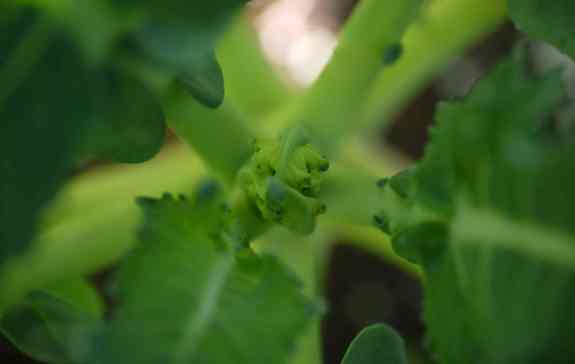
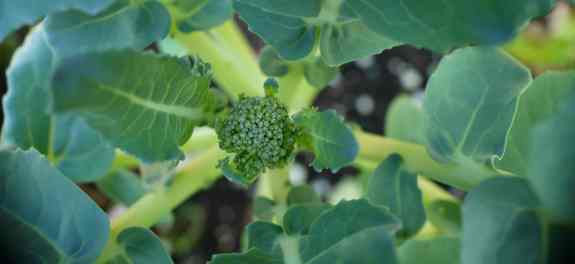
Broccoli1Ah, the homely family Brassicaceae!  So hearty!  So healthy!*  Mon petit chou–you are truly a taste wonder.  Now if I could just get the rabbits to leave me a bite…


Bitten


*So much roughage?

Copyright 2013, Lori Fontanes

Baby Bug

BabyMantis

Me grow up be big, bad bug eater one day.

Copyright 2013, Lori Fontanes

Silly Things We Say To Our Pets

NotListening

Come here!

Hungry?

Stop that!

I told you to stop that!

Wanna go out?

Who’s a pretty boy/girl/doggy/kitty/piggy/duckie/fill-in-the-blank?

Stop that right now!

Who loves you?

Who loves you?

Who loves you?

Aw, come here…

MeNeither

Copyright 2013, Lori Fontanes

You Say Tomato, I Say Delicious!

TomatoFlowerBugIt’s waaay too early for optimism but I’m gonna cross my fingers, knock on wood and ask the Ghost of Pasta Dinners Past to think kindly on my so-far so-hearty tomato plants.  Puh-leeze, Kind Ghost, grant me a dozen or so decent fruits this year!  I’m not greedy,* I’d just like to watch the little globes grow on the vine, mildew-free,  get enough for a coupla meals and bask in the satisfaction of a gardening job well done.

Is that asking too much?!!

Probably.

Well, OK, maybe not.  I might have been saved this year from the dreaded How Not to Grow Tomatoes Incompetence Syndrome by one of my blog followers.  Perusing the timely post of a fellow organic gardener, I learned that purchasing tomato plants is more of an art than previously realized.  According to Christienne Leigh Hinz’s article, buying a larger plant does not earn you any pizza points.  In fact, you may be doing your plant a disservice by setting it up for shallow root disaster, including exposure to disease and insect depredations.  Although I had not (just) planted flowering or, heaven forfend, fruiting tomatoes, they were not the humble 4” pots Hinz prefers but the larger, slightly more impressive type.  Problem with this sort of showiness is that you may doom your efforts downstream by not allowing the plant to develop a sturdy root system in its new home before letting it take on more formidable tasks.
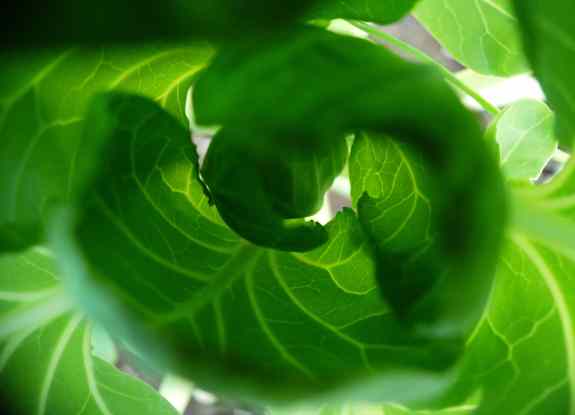
Hinz’ Sho’Nuff Organics solution is to ruthlessly trim the lower branches and almost start over.  (She also posted a comment from someone who recommends petting the tops of your tomato plants and, dear me, I tried that, too.  I mean, what did I have to lose?**) Then, after rearranging my plants’ silhouettes, I left town for six days.  While I gallivanted, the garden caught the edges of Hurricane Andrea (lots of rain, not much wind) and when I got back, flashlight in hand, peering into the rain-spattered darkness, bingo!  Big bushy tomato plants—happy, healthy and ready for pollinators.  Don’t know whether it came down to trimming, petting, enough rain, not too much wind, just the right amount of heat or my fervent prayers but, heck, I’ll take it.

I’m not greedy.  I grow tomatoes.


FirstFruit


*Unless it’s chocolate we’re talking!

**Dignity?  As if.


Copyright 2013, Lori Fontanes

Do You Mind?

HeyalittleprivacyhereJust trying to lay an egg here!


SomePeople

Some people…


Copyright 2013, Lori Fontanes

What Am I ?

MysteryPlant1

MysteryPlant3

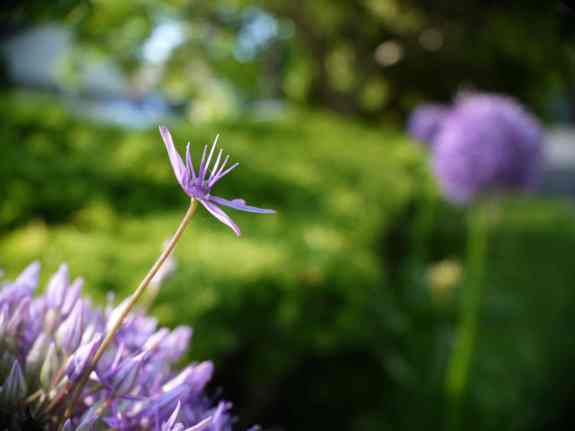
MysteryPlant2One clue: “knee high”.  Any guesses?

Copyright 2013, Lori Fontanes

Le Canard Fou

Quack2

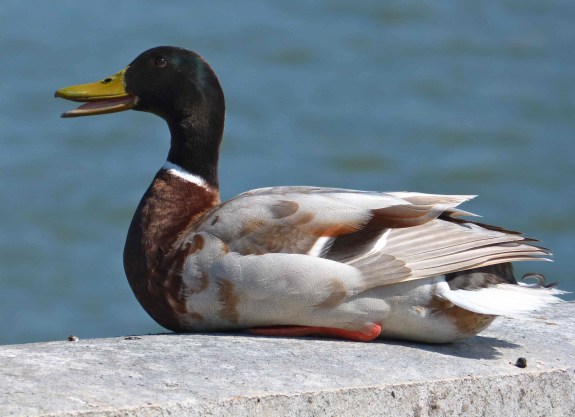
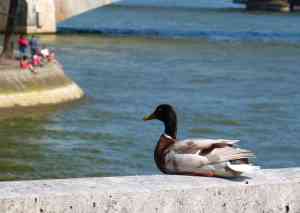
In Paris, even ducks like to sunbathe along the Seine.  Last week, they finally got a very hot day so tout Paris came out to catch some rays.  In town for a mini-break, I got to test my new travel camera and practiced some optical long shots with this lone canard on a wall.  Now, my experience of ducks is they don’t like it all that hot– mine generally hide under the shrubs when the going gets really sticky.   This young male, however, seemed to prefer “baking” on the stones far above the water– un vrai Parisien, non?


Sunning

Baking, not roasting.


Copyright 2013, Lori Fontanes

My Pet Dinosaur

PJPeep2

HandPeep

PuffCU

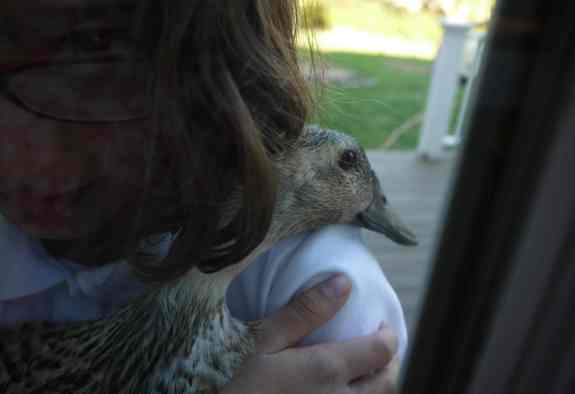
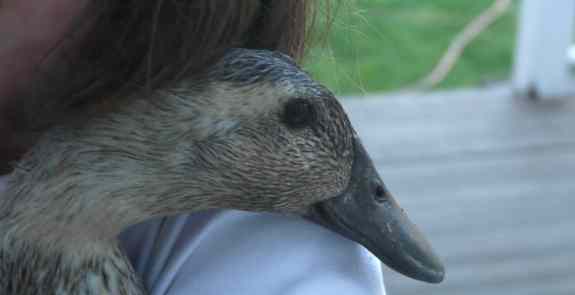
In his amusing new book “My Beloved Brontosaurus: On the Road with Old Bones, New Science, And Our Favorite Dinosaurs”, writer Brian Switek shatters myths and childhood memories with the latest in dinosaur science.  Lots of renaming and reimagining gets reported but one idea in particular caught my attention.  Switek takes the creatures that we call dinosaurs (T.rex & Friends) and calls  them “non-avian” dinosaurs.  Meaning, today’s birds are not just related to the stars of Jurassic Park, they’re bona fide dinos themselves!  Stay tuned for more details in a future post but…hey, why the duck is my coffee cup jiggling so badly?!  What is that loud, thumping…what the…arrrrrghhhhhhh…….


Copyright 2013, Lori Fontanes (gulp!)

Earth to Mars

Transmitting

Start transmission now.


Copyright 2013, Lori Fontanes