

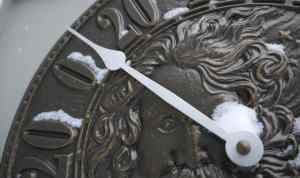
 Can you believe it’s the same object as yesterday? So much to see in so small a space! (It’s, like, Dr. Seussian or something!) Tomorrow, the reveal…
Copyright 2014, Lori Fontanes
Can you believe it’s the same object as yesterday? So much to see in so small a space! (It’s, like, Dr. Seussian or something!) Tomorrow, the reveal…
Copyright 2014, Lori Fontanes


 Stay tuned!
Copyright 2014, Lori Fontanes
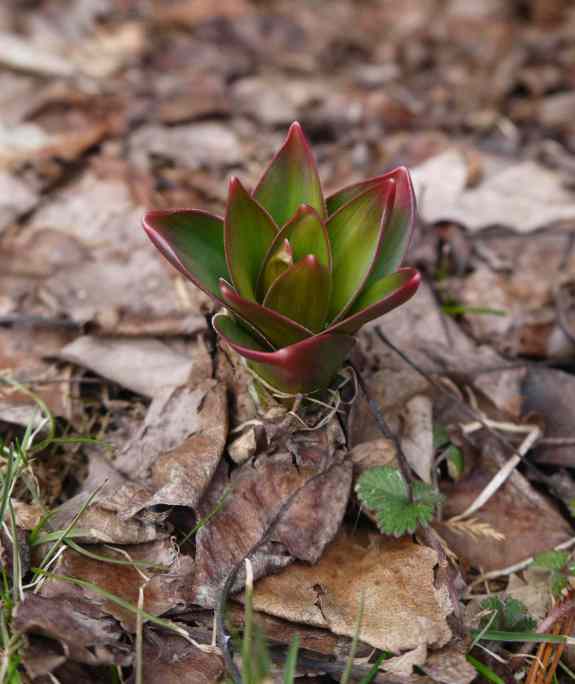
Thought I’d run this reminder of spring (edition 2013) to perk up our frozen spirits. You see, despite the current forecast, I’m truly convinced we’re really (almost!) there. Evidence includes:
1) birds singing their spring songs,
2) chipmunks out of hibernation,
3) and–most significantly–the cats shedding so much fur I’m running out of vacuum cleaner bags trying to keep up with it.
Well, just kidding about that last part. In reality, my vacuuming strategy consists of seeing dust bunnies, noting their existence, planning to deal with them, thinking about dealing with them until, finally, wading through a sea of allergens, I can’t do anything but eventually, actually vacuum.
Or think about it some more.
Copyright 2014, Lori Fontanes

 Copyright 2014, Lori Fontanes
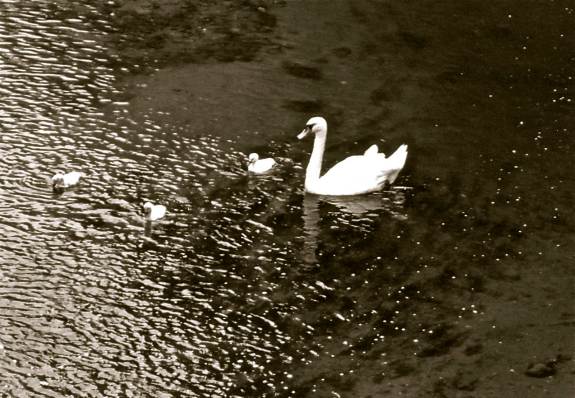
First a giraffe, next the swans? Maybe.
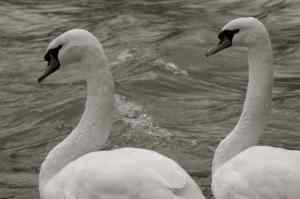
According to the NY Times, the New York State Department of Environmental Conservation wants to get rid of long-time bird immigrants, the European mute swan, and “has declared war” on the elegant waterfowl. Deeply unsettled by this story, I decided to download the draft proposal and read for myself. Okay, it’s still unsettling (sensitive readers, be advised) and this story doesn’t mention the deadline for public input to this process– February 21, 2014. So if you want to weigh in on this issue, now’s the time to do so. Meanwhile, here’s my take.
Okay, I get that introduced species can present formidable and even noxious environmental impacts but where in our list of pressing global problems should a quandary like the swan be ranked? In these days of limited public resources is promoting the killing of beautiful animals really a good way to spend tax dollars?
Yes, I realize that swans compete with other wildlife in a battle for habitat. But even though I love ducks it bothers me that some agency has decided to privilege them over their web-footed relatives. Maybe I’m squeamish but it disturbs me that the state can create such a clinical value system and then act on it in a broadly lethal manner. And, by the way, is it necessary to eradicate all free-ranging mute swans in New York? If even possible, the goal seems rather extreme. As in the even thornier case of humans vs. whitetail deer, wouldn’t a judicious removal of those in sensitive areas be more reasonable? The report itself says that these swans are “largely non-migratory” and the two downstate populations “have stabilized during the last decade” so management rather than blanket elimination seems like a better solution. If, as the DEC says, the number of mute swans has increased most quickly in the Lake Ontario area and “likely originated” from stock in Canada, wouldn’t a targeted regional/international effort make the most sense? (And why do I hear a tune from South Park over that last sentence?)
Then there’s the difficult topic that others have raised: immigration status. Introduced purposefully in the 1800’s for their aesthetic appeal (and not stowaways like other more harmful invaders), you have to wonder at what point does a non-native like this swan get to become native? Should it be 100 years? Two hundred years? Never? If you start with the swan, do you move on to starlings? To the House Sparrow? The pigeon?*
It’s true, of course, I have a personal affinity for waterfowl and swans could be considered the ne plus ultra of the downy class. (You’ve heard of duck and goose down–there used to be something called swan down, too. Before we stopped harvesting swans, that is.**) In fact, in pre-revolutionary France, swans were strictly protected by the king, and they’re still a majestic presence on the Seine. Clearly, there’s something special about these impressive creatures that touches people deeply. Maybe it’s their remarkable beauty paired with incredible power. Swans are strong–their wings, in flight, like a feathered army. And I’m not downplaying their capacity to intimidate or even harm, especially when protecting their young, but even the DEC describes the “potential for injury” as “low”. Is this on par with the level of danger presented by a mountain lion, a bear, a wolf? Here in Westchester we’ve apparently agreed to live carefully with our new coyote neighbors so why are we drawing the line at swans? Could it be because there really are rather few of them and they’re relatively easy to capture?
When we first moved to New York, my then-second grader and I would rejoice in sporadic sightings of swans in a creek we passed on our way to school. In our town, these birds are rare enough to be pleasurable and common enough that they may glide over to you if you’re walking along the water’s edge. Like the folks in the article, we, too, named “our” swans and followed their seasonal progress, including the delightful appearance of cygnets from time to time.
Look, I’m a strong supporter of environmental protections so to be at odds with the DEC on this topic feels rather awkward. I am fully in agreement that an education program to the general public is in order. Management and removal where health and safety issues arise is also reasonable. But I really hope I’m nowhere nearby if the day comes that they take the swans. It’s not a picture I want to remember nor a sound I want to hear. It would be tough to even walk past that creek knowing that no matter when I look for them, the swans won’t be there. Ever.
If we’re searching for destructive invasive species, maybe we should look in the mirror first. Humans send microbeads willy-nilly into watersheds. We fritter away endless kilowatts blogging, tweeting, gaming and checking the weather.***. We level mountains, control rivers, spill radiation into oceans– who are we to judge the swan? As Elizabeth Kolbert explains in her new book, “The Sixth Extinction”, human beings wreak incredible havoc in all kinds of ecosystems. Why do we single out this one bird for its impacts and not deal with our own? Is it because they’re low-lying fruit in a fruitless effort? Are we putting our finger in a dike that already spilled over? Can’t there be a better result from this cold calculus?
Who will speak for the mute swan?
Wait. I think I just did.
*Talk about your environmental impacts!
**Swans are a protected species. Yes, that’s ironic.
***Or maybe that’s just me…
NYSDEC accepting comments through February 21, 2014:
fwwildlf@gw.dec.state.ny.us
Subject Line: Swan Plan
Copyright 2014, Lori Fontanes
 Can you spot the danger lurking in snowy branches?
We kept the ducks penned up for a few days recently as we waited for this Cooper’s hawk to (hopefully) move along. S/he’s one of a pair that has been hanging out in the neighborhood and I’d hoped the storm would deter them but, alas, they’ve still got our yard on GPS. It’s been a long, ice-coated winter so the raptors may be left with only feeder birds to hunt since much of their regular prey is either hibernating or just plain hiding.
Yet another complication to a thoroughly challenging cold season! The ducks have been troupers but we’re getting a bit weary, I must say. Keeping fingers crossed that the hawks will take off for easier pickings.
But they’re probably pretty patient.
And hungry.
Copyright 2014, Lori Fontanes
 After reading Bill McKibben’s Eaarth, I felt relieved to be back in a place where it snowed just in case I never got to see snow again.
OK, I’ve seen it.
You can stop with the snow now.
😉
PS, remind me of this come August.
PPS, I really do prefer winter to a buggy, sticky, fry-an-egg-on-your-forehead New York-style summer.

Happy Valentine’s Day!
Copyright 2014, Lori Fontanes
“Furthermore,” the rodent added, “nyeanyeanenyeayea!”
Sigh.
Copyright 2014, Lori Fontanes
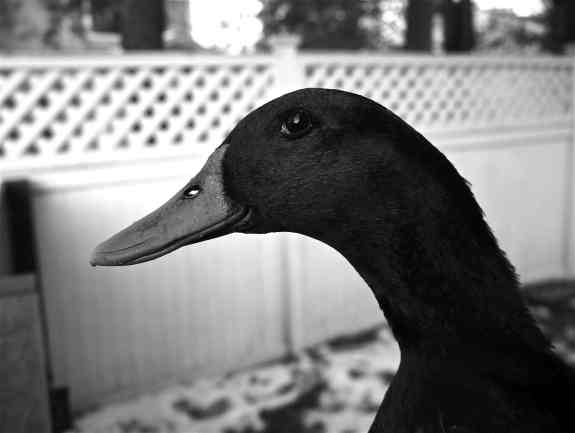 The other day I tried to buy tractor wheels for our duck pen but the website turned down my credit card.*
WTD?!!!
Even though this happened online and not in person, I felt outsizedly annoyed. Whaddya mean my credit isn’t good enough to buy chicken feed (or similarly priced items)?! I just paid that card! Is this some kind of sinister plot to undermine the craft of backyard poultry-raising?
I took a moment to consider my options. Well, I could try another card but the error message seemed to imply that something might be fishy. (Or phishy.) What with all the, ahem, “identity malfunctions” that seemed to proliferate like waterfowl excretions on a snowy lawn, I didn’t want to take any chances. I called the 800 number.
The customer service rep got right to the point: It’s not us; it’s you. (Oh, thanks for letting the customer attempt to be right.) Won’t you even consider the possibility there’s a glitch on your website? Nope. Call your credit card company. But the error message seems to suggest there might be security issues, said issues presumably generated by pressing the “purchase” button while digitally connecting to the item “chicken tractor wheels” combined with your company’s web presence and my (I swear!) robust purchasing power.
Call the card company, ma’am.
As we debated the likelihood of shenanigans in this admittedly low-cost instance, I harrumphed a bit then asked if I could complete the transaction by phone. Maybe if I directly gave her a different card number, I could also bypass what I increasingly believed were sinister forces intent on depriving my waterfowl of a more easily moved summer enclosure. Hmm, never ordered from these guys before. I know they’re a Major Retailer but, heck, maybe some oddball hacker with a disdain for ducks had rigged it so that–
BEEP! The credit card folks beeped in. I put the service rep on hold and picked up the other line. An automated voice asked me to verify a few recent purchases. Ah ha! See! Fraud alert! Just as I suspected: Suspicion! See! Something suspicious did occur! Wait, but what?
The robot stuck to its script. “Apologize for inconvenience” “please press 1 if you recognize” blahbedeblahbedeblah. The three charges in question didn’t seem weird (to me) but tell me what you think:
1) A rather hefty payment to a publisher for both print and the digital editions of a daily newspaper.**
2) The attempted poultry-related purchase.
3) Heavy-weight silk long-johns.***
Ah, right.
Well, at least the computer couldn’t see me blush (I think) so I quickly verified the three motley outlays and released my card from credit purgatory. Since the other call got lost, I went back to where I started– their website– where finally, successfully, I used my credit card to complete the transaction.
In the end, I guess you could say that the Case of the Ornery Web Sale turned out to be neither phish nor foul. In fact, I think what really happened is some pesky algorithm declined my card on aesthetic principles.
You wanna buy chicken tractor wheels for your duck pen?
No can do, lady. No can do.
*Don’t you *hate* when that happens???
**That’s it! Nobody gets the print edition of a newspaper anymore!
***Maybe the fashion police got involved.
Copyright 2014, Lori Fontanes

Did someone call for backup?
Copyright 2014, Lori Fontanes
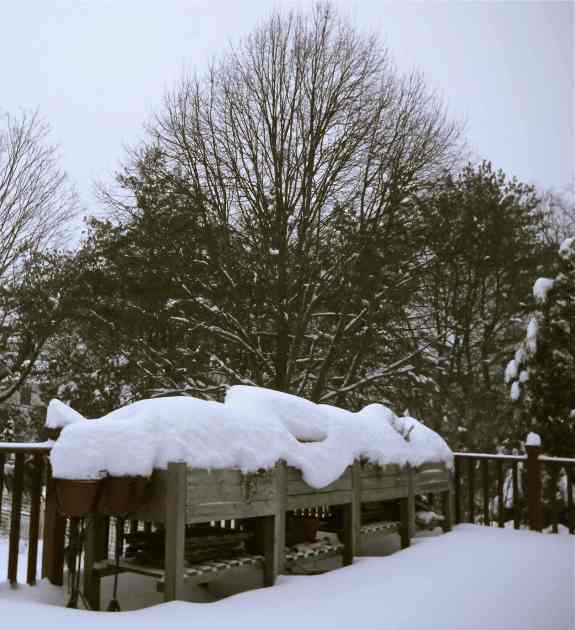 Too late! More snow!
Copyright 2014, Lori Fontanes

 Punxsutawney Phil said six more weeks of this. NOAA shows rodent track record here.
Copyright 2014, Lori Fontanes
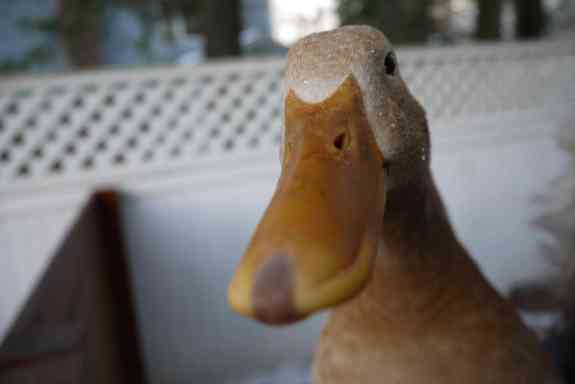 My mama didn’t raise no dummies and apparently I didn’t either.
Okay, maybe I do tend to take too much credit for the SAT scores of my four remaining waterfowl but give a proud mama duck some slack. As the long-suffering, I mean, long-time followers of this blog already know, our feathered babies arrived at the local post office* only two-days-new so I got to play Mrs. Mallard from the first carefully administered drop of water. [see here]
THEY WERE SO ADORABLE!!!
Ahem. Anyway, let’s fast-forward a bunch of months to the point of today’s post: Ducks are darn smart. Ornithological, as it were. Geddit? Ornitho (bird) logic (Spock) = feathery types that can figure out how to save their butts in cold weather!
It’s elementary, dear Readers.
Please understand that most of their lives (about nineteen months of it), our waterfowl have resided in the deer-fenced confines of our roomy backyard. By now these curious birds know every inch of the territory–and we have web-footed evidence all over the snowy yard to prove it!– and what’s more, they also know they’re Not Allowed outside the gates because, well, that’s the way it is. Mama and the smaller version of Mama come through those portals to deliver food, water and fun** but Not Ducks. At least, not on their own. The girls sometimes get to leave the yard and stay in the garage but they’re generally carried there, fussing and quacking all the way.
Not this winter, though.
This winter the number of nights on the under-10 degrees and/or windy chart have exceeded the “isn’t this amusing?” metric and tipped into “what a pain in the derrière!” In other words, carting four ducks to and from yard plus back again, twice a day, every day (not to mention four buckets of water several times as well) has gotten to be a total drag.
Here’s the ducks-are-smart-part.
A couple weeks back, I decided I didn’t want to keep doing this one duck at a time thang since my daughter had to eventually go back to school and then I’d be stuck by myself trying to close the garage door with one hand as I held a powerfully squirming bird in the other. The only other solution would be to take all four at once. That’s right: I made them walk.
I began by picking each up and setting her down next to the wading pool/temp bedding. When they were all out, I shooed the group toward the door with gentle scooping motions. That first day they were not quite sure what to do but certainly game to try. As they stepped into the snowy driveway, they looked around, vocalizing excitedly then a couple plopped down, flummoxed. I picked up the littlest and as the rest watched, opened the gate. After a few more flourishes (“this way, sillies!”), they got the idea and scurried inside.
The next day, they beat me to the gate.
The day after that, they hung out near the gate at the end of the day, waiting to be taken inside.
So, like I said, ready for Harvard.
I’ve been so proud of my girls for their feats of memory and learning that I even (briefly) considered a smarmy bumper sticker like “My duck is smarter than your honor student” or something like that. But, no, we’re not smarmy. We backyard waterfowl types are actually pretty modest.***
Think we’ll just leave the crowing to the chicken crowd.
😉
*Luckily, no postage due!
**If you call chasing us around to get us to do things, fun–then, heck, yeah.
***Er, um, except for this global distribution system called a Blog on the Internet.
Copyright 2014, Lori Fontanes
 Depends on who got there first.
Copyright 2014, Lori Fontanes
Copyright 2014, Lori Fontanes


Copyright 2014, Lori Fontanes
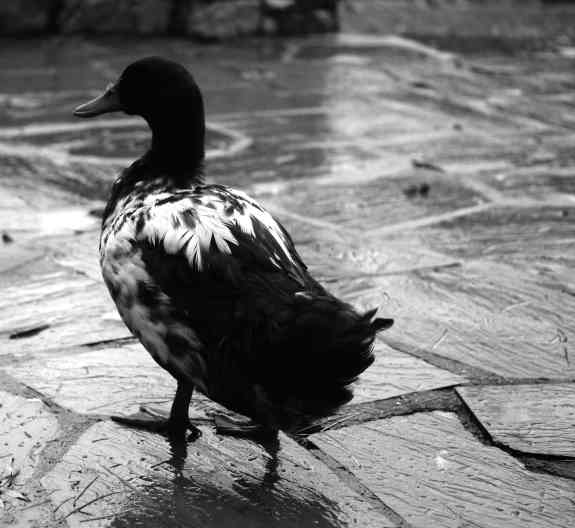 Humans don’t get it.
What do you mean putting us to bed early is not a game? Don’t you want us to run away when you try to catch us?
There you were, on your own because that smaller one who usually helps with pen-up had gone to the movies with her dad. You said, no prob, I can handle it but you didn’t count on the rain coming earlier. Or the wind. Better get those ducks inside before the storm gets any stronger, right?
Ha!
Well, you started out easy: Gladys. You scooped up sweet Gladdy, popped her into the coop and thought you were doing fine.
Right.
Then you snagged Bonnie, a bit slower than usual–though not any less feisty!– and, okay, two down, two to go.
Then the droplets turned to downpour and as you slalomed on the wet lawn, it may have struck you then: If you couldn’t get us all inside, you’d have to leave two or, worse, one duck alone. Unpenned. In the dark. At the raccoon hour.
Say, what time was that movie getting out???
Using all the powers of your non-avian brain, you forged ahead– cutting Puff off from Fannie and with some huffing and, er, puffing, managed to safely capture and deposit her.
And then there was one.
Come to think of it, leaving the biggest, toughest, strongest one for last may not have been your best strategy. In fact, seeing what you were up to may even have given Fannie an edge. Wasn’t the idea to see how many times you could circle the pen before the human caught you? Like maybe five or ten or more?
Meanwhile, from inside the coop’s confines, we cheered our still-free sister like fans at a triple-A baseball game. Hooting and hollering, we egged Fannie on and she gleefully waddled you a wacky race. And she was winning.
Then, finally, when you couldn’t take another near-spill in that lovely bit of mud, you threw yourself in Fannie’s general direction, swiping the air as you missed her one more time and, in total and complete exasperation, shouted in a Very Loud Voice, a single, simple word:
STOP!
So, Fannie stopped. And, before she could change her ducky mind, you swooped down and nabbed her, into your arms and into the coop where we greeted her with quacky acclamations. But admit it. You probably felt more than a little silly.
Never occurred to you to just ask, did it?
Copyright 2014, Lori Fontanes


 Now leave me alone.
Copyright 2014, Lori Fontanes
 Psst, Mildred!
 Oh, no! Not again!
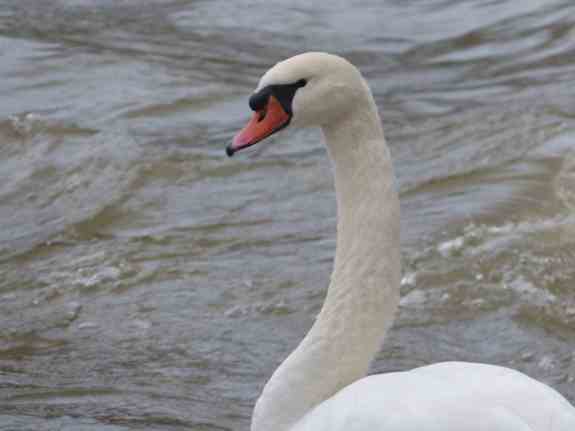 Do you mind?
 What if we don’t want to be on camera?
 What do they mean, “too late”?
Copyright 2014, Lori Fontanes
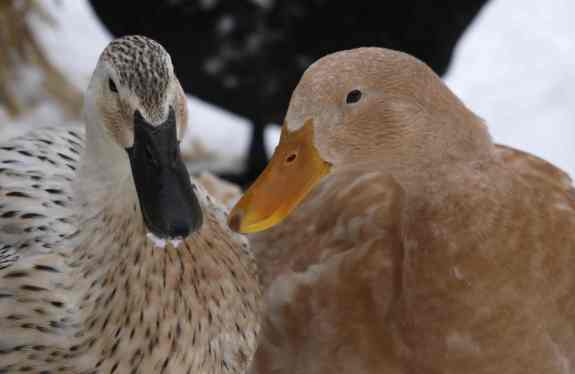 Wow, it’s amazing but, apparently, the biggest question in America right now is something I might actually be able to answer:
How cold is too cold for ducks?
Right, so maybe not the biggest biggest question in the US of A but, still, a real query that has risen to the top of the What the Ducks! search stats for the past few (freezing) weeks.
“How cold is too cold for young ducks?” the worried waterfowl aficionados repeatedly type. “When is it too cold for ducks?” goes another variant. “Can ducks get too cold…” Well, you get the, er, snowdrift.
Now, I may not be as experienced as Dave Holderread, Cherie Langlois or Carol Deppe but I’ve learned a coupla things about a coupla ducks over two cold-weather seasons. So, here’s my take on ducks and cold weather— it all depends.
It depends on the size of the breed.
It depends on the health of the duck.
It depends on whether you live closer to the equator or the Arctic Circle.
And, perhaps most importantly, it depends on whether you can be described as relatively carefree about poultry or whether you’re better characterized as a full-blown Helicopter Duck Parent.
I cop to the latter.
Therefore, as a card-carrying member of the HDP Club and based on two New York area winters with four-five ducks of three different breeds, my basic system goes like this:
Above freezing: I don’t worry.
Between 21-32° F (daytime): I have to keep water bowls on the sunny side of yard and check for ice forming, especially if it’s not sunny. (Ducks always need drinking water.)
Between 10-20° F (overnight): I put the ducks in the coop instead of the straw bale-enclosed pen.
Under 10° F and/or in very high winds: ducks go into the garage in a temporary shelter consisting of a kiddie pool filled with pine shavings, surrounded with plastic garden fencing, several packing boxes and an MP3 device playing lullabies. OK, maybe not that last one.
And that’s it. I realize it’s not totally comprehensive coverage of the popular Duck vs. Cold conversation but I do hope that anyone who randomly discovers this post may find its humble contents useful.
Oh, and one other thing.
No matter how chilly it gets, please resist letting the ducks stay in the guest bedroom. I mean, once they figure out how cozy it is where you live, they just might never leave.
 Copyright 2014, Lori Fontanes


 What the Ducks!