


Copyright 2015, Lori Fontanes
Copyright 2015, Lori Fontanes
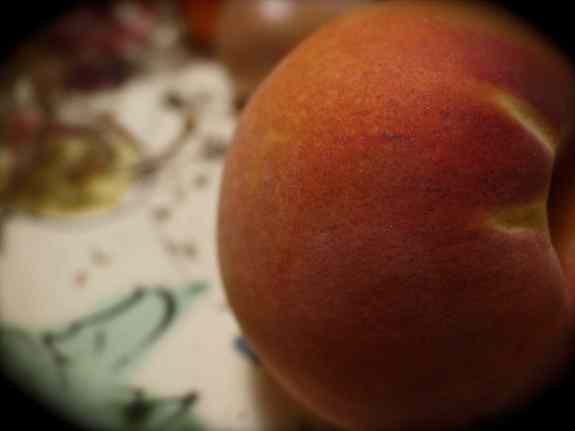 Marcel Proust had his madeleine but me, I had a peach. As it happens, not an American peach and certainly not a run-of-the-mill apple or orange, the kind of fruit frequently tossed from school lunch trays across our country. To be honest, I hadn’t paid much attention to whole fruit for years. Why bother with the real deal when we have so many fruit-flavored alternatives?
And then I ate that peach.
Right off I realized I’d forgotten what peaches were. How the flavors of tart and sweet tangle on the tongue. When I ate that peach in France six years ago, I instantly returned to the row home of my Philly childhood, a time and place when every kid could eat a perfect peach, not just foodies or world travelers.
Times and produce have changed.
Recently, we heard more from the trenches of plant food promotion with some mixed reviews of our national school lunch program. On one hand, we found that under the 2012 federal legislation school cafeterias became “healthier under new regulations” (New York Times, 8.28.15) and that a “majority of Americans support providing schoolchildren with healthy meals that consist of more fruits and vegetables” (N.Y. Times, 8.19.15). On the other hand, we received a dismaying snapshot of actual consumption habits in a recent public health report showing an increase in waste, especially vegetables. In their study, the “Impact of the National School Lunch Program on Fruit and Vegetable Selection in Northeastern Elementary Schoolchildren, 2012-2013”, the authors state that more than 80% of 240 school nutrition directors reported an increase in fruit and vegetable waste.
In other words, they’re still tossing those apples and dissing that broccoli.
As the Los Angeles Unified School District can attest, mandating a healthier meal is not the same thing as getting a child to eat it. In lunchrooms nationwide, students and meal service employees have grappled with the real world application of laudable aspirations, sometimes successfully, sometimes less so. According to an L.A. Times story last year (L.A. Times, 4/1/14), LAUSD “students throw out at least $100,000 worth of food a day”, a very unappetizing situation.
This past winter as a part of my work as a community wellness advocate, I gained further insights when I listened to a panel of food service administrators give their side of the story. While it’s clear the staffers really wanted to find a way to feed our children well, I saw for the first time how the system itself works against rosy outcomes. It starts, of course, with cost. The food service reps cited a gamut of daunting federal guidelines and strict price constraints. We also heard about the queasy relationship between what kids prefer (chips and other snacks) vs. what they don’t (whole fruits) and how a meal service organization needs to keep the customer happy to make their budgets work. The meal suppliers see students as the customers, not their parents, but, frankly, no one’s all that happy. And, by the way, why are we blaming the children for the shortcomings of a system that can’t get better quality ingredients or create food that satisfies? If the system can’t meet reasonable demands for nutrition and taste, it’s probably time for the system to change.
Which brings us to how the meal program deals with fruits and veggies.
Under the 2012 regulations, “the meal selected by each student…must include at least one fruit or vegetable.” Right, so does this mean we can put any old apple or carrot stick on a tray and call it a day? Thanks, but pass the baked French fries! I’m pretty fanatical about healthy food but even I won’t eat just any fruit because I, like our children, have had so many bottom-of-the-barrel experiences. What’s worse, this “good for you” lunch item often sits off by itself. That’s practically daring a kid to ditch it. By treating plant-based nutrition in this way– as a money-wasting, begrudging afterthought– we’re demonizing fruits and vegetables and it’s getting us exactly nowhere.
So, what do we do? Well, the good news is that around the country many people are already working on creative ways to tackle this longstanding problem. With support from national initiatives like The Edible Schoolyard Project to regional efforts like the New York Coalition for Healthy School Food, folks have warmed to the idea that our kids deserve better lunches, not to mention, breakfasts and dinners. We need to look at how we source, prepare and serve the food that our children need to fuel their days of learning. It won’t be easy because it requires a cultural shift at home as well as at school, yet meals that use nutritious ingredients in tasty ways are not only possible, but necessary. After all, we’re not just feeding our kids, we’re feeding our future.
Copyright 2015, Lori Fontanes


We have more food now than at any other time in human history but can we really call all of it food?
Not talking the above-photo’d fruit & veggies but rather those rainbow-colored, flavor-injected items packed with ersatz and designed to distract us from the fakery. Look at our plates–are we eating food or phood?
What’s worse, even as we congratulate ourselves on the ability to roll out vast quantities of these low-priced items, the inefficient, misguided food leviathan wastes 40%* of what we grow. Then there’s the dazzling array of high-tech workarounds that keep the machinery spinning, often harming soil, water and wildlife in the process. And, of course, the juggernaut of advertising that flacks the phoods, building intractable loyalties to the nutritionally suspect while promoting a sense of normalcy to the deeply unnatural.
Welcome to Phoodville.
In a mere handful of centuries, we’ve arrived here from a pre-industrial world where people chronically lacked food to a world where people still lack food and others have too much. Or maybe just too much of the wrong kind?
This is the world of phood in 2015:
We have so much to eat and yet we’re still hungry.
We have so much to eat and so many of us are sick.
We have so much to eat and we’re not building, we’re burning.
We can do better. We need to do better. Let’s talk.
Join me @LoriFontanes as I listen to the conversation #NYTFFT @StoneBarns this week at the Food for Tomorrow conference.
*Source: National Resources Defense Council Issue Paper; August 2012; “Wasted: How America Is Losing Up to 40% of Its Food From Farm to Fork to Landfill”; Dana Gunders, author
Copyright 2015, Lori Fontanes
 Isn’t it time to stop growing food like it’s 1999?
The 21st century needs better ways to grow/cook/share/eat. And the world can’t wait–we needed better yesterday. So now’s the time late to start planting seeds for a tastier, healthier and, yes, more equitable food system in the future.
All this week look for my updates from the New York Times’ Food for Tomorrow conference at Stone Barns Center for Food & Agriculture. Top chefs, writers, thinkers and farmers along with experts from industry, government and academia will dig into the complex topic of what to grow and how to grow it. With 10 billion folks projected to show up for dinner by 2060, we need to talk today about feeding our tomorrow.
I’m honored to have a seat at the table. Be there with me here at What the Ducks! or on Twitter @LoriFontanes.
Copyright 2015, Lori Fontanes


Copyright 2015, Lori Fontanes
Check out what happens when the new ducklings finally meet our older ducks!
Copyright 2015, Lori Fontanes


Copyright 2015, Lori Fontanes


Do you know where your squash bees are?
Copyright 2015, Lori Fontanes
Check out my “Quack Me Up” column in Backyard Poultry Magazine for more fun with ducks! Or online at www.backyardpoultrymag.com and YouTube.
Copyright 2015, Lori Fontanes


How lucky are they? See here.
Copyright 2015, Lori Fontanes
If you want to buy a couple of ducklings, it’s pretty easy.
(Usually.)
Pick a breeder.
(Avoid places with bad reviews and/or quarantine.)
Choose a breed.
(Not your first choice, no one has that. Or second. How about third?)
Backtime the whole thing so you can make sure you’ll be around every day/night/week until they’re fledged, that is, quacking. Quacking means they’re teens and should be able to handle the big ducks.
(Big ducks have been known to pick on little ducks.)
Are you doing this too fast? Are you trying to fill that duck-sized hole in your heart where Gladys used to live?
(Yes.)
You choose three Buff Orpingtons, calm and steady hens. The farm you pick doesn’t do fancy. You make the purchase over the phone and they give you a date. That’s it.
(D-day.)
Even though Dave Holderread says hatchlings don’t need extra food and water during shipment (in fact, some say it’s detrimental), the breeder suggests paying extra for Gro-Gel anyway. You demur in your head but your voice agrees. They get the Gro-Gel. These hatchlings that haven’t even hatched on this day weeks before when you make the decision to replace Gladys.
(Not that you can.)
D-day doesn’t just mean Duckling Day, it’s also Delivery Day and almost all poultry in this country comes via U.S. Priority Mail. In big and little cardboard boxes, punched with round holes and making a peeping racket.
I can’t see how you could look at that box and not realize it’s full of living things.
For those who’ve never had baby birds mailed to them, here’s how it goes:
The eggs hatch. The hatchlings are boxed. The boxes are brought to the post office. This is Day One.
The hatchlings can live without food and water for a couple of days.
Day Two is transit day.
Early on the morning of Day Three, you’ll get a call from your local post office. Your phone number is printed on the outside of the box so that anyone can see it easily and call you as soon as the shipment arrives.
It’s best to stay near the phone from 6 AM on. They always call early. No one wants to have a box of live animals sitting around their loading dock, especially when it’s hot.
It’s almost May but it’s already warm the day we’re supposed to get the call from the post office.
The garage is clean and ready for the new babies: a brand new starter pen filled with wood shavings and heated to the correct temperature under the brooder lamp. We consider driving to school so that my daughter can be home when the ducklings arrive.
Six o’clock, no call.
Seven o’clock, no call.
My daughter leaves for school.
Eight o’clock and I start to lose it. Why haven’t they called?
I decide to go to the post office. It’s really getting hot. I go around the back since the main door isn’t open yet. It’s very quiet.
No one knows anything about ducklings. Yes, the shipments should be here by now. No, they haven’t seen one for me.
They promise to call.
I go home.
I start a frantic day of research, trying to find a tiny box of baby birds lost somewhere between California and New York. I email the farm to get a tracking number, they send that number, it gets me nothing except in-transit notices on the USPS website. I call the 800 number and they can’t find it either. I decide to go back to the post office.
It’s even hotter now.
And probably I’m very tired from all that cleaning and preparing and waiting all night wondering about a phone call so please understand that when I tell you I start crying when I explain what happened to the post office person who has to listen to my story and we both, at the same time realize:
They’re probably not coming today.
It’s Day Three.
If you have a weeping duck owner standing at your counter who makes you explain exactly how these deliveries work (“where is it coming from? what airport? can I go there?”) then check with your supervisor and make sure, double-triple sure, that there’s no one else to call, no other way to find out where that box is
you may tell her there’s a chance they will come on the afternoon priority shipment.
not a big chance
you can call back around 3
not a big chance
otherwise, tomorrow,
Day Four.
You call your mom and retell the story, still weeping, and together you mourn these three little lives. You try not (but can’t help) thinking about process. And then you wonder what if they’re lost and then found.
(Too late.)
What if you still get a delivery?
At three, you call the post office and recount your tale again (keep it together!) and the poor man, so gently, so kindly, tells you no, no box today and then (keep it together!) you ask the question you’ve been holding inside for hours:
“If the box comes tomorrow, and it’s quiet, do I still have to accept it?”
He says, after the lightest pause,
“No.”
We hang up quickly.
All night, I dream
(no cloudless sleep)
I ride a storm of replays, bits of conversation, what ifs, what shoulds, what will I do when/if–
In the morning, I send my daughter to school. I feed the ducks and try not to look at the little duckling pen still sitting under the brooder lamp that I haven’t yet turned off.
Around 7, the phone rings.
“Your box is here,” the man says.
I ask, because I have to,
“Can you hear them?”
The rest of the day, and for weeks after, I remember the two words I later told my mom as soon as I got there and back and cut open the box and find that decimated serving of Gro-Gel that I almost but oh my thank God did not turn down.
“They’re alive.”
Note: “Ducklings are sturdy and can be shipped thousands of miles successfully if the shipper knows what he or she is doing,” Dave Holderread writes in Storey’s Guide to Raising Ducks. Holderread also affirms that in his extensive personal experience with USPS, “all the ducklings arrive safely in the vast majority of shipments.”
PS, I sent the post office staff a giant box of chocolates.
PPS, although this took place back in the spring, I just couldn’t write it up until now.
Copyright 2015, Lori Fontanes
 You are feeling sleepier and sleepier and sl…..zzzzzzzzzz.
Copyright 2015, Lori Fontanes


Well, sorta. Let’s give thanks for plants that convert sunshine to food so that we can eat. Or as Wendell Berry puts it, “the harvest of sunlight”. Magic + delicious!
Copyright 2015, Lori Fontanes
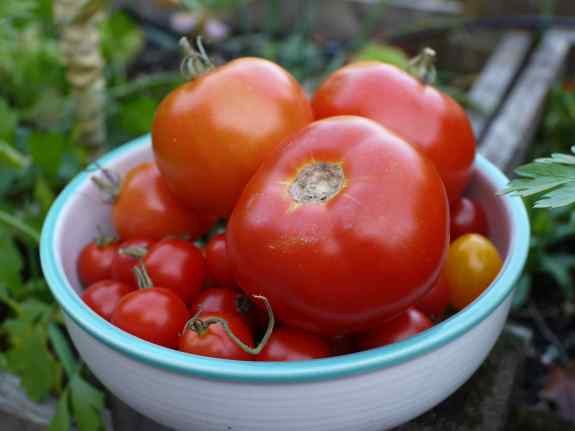 Don’t want to freak anyone out but I read the scariest thing a while back and thought I’d share it with you guys instead of holding it all in. Okay, here it goes: Tomatoes like to be buzz-pollinated.
Yikes!!!
Right. I can see you’re as shocked as I am so let’s go through the steps slowly as I lay out the horrifying tale. Be warned, though, it’s gonna get a little technical and, um, colorful* but bear with me. Thin crust extra sauce is soooo worth it!
Okey dokey, so, the way I understand it, tomato flowers release their pollen most effectively when they’re, um, stimulated by the vibrations of the visiting apiarian representatives (hereafter known as “Bees”), which said Action causes said Pollen to transfer to aforementioned Bees, henceforth creating the opportunity for the activity known as pollination with superior setting of fruit when compared to wind-generated systems.
In other words, no bees, fewer tomatoes. Fewer tomatoes…LESS PIZZA!!!**
Well, there are some workarounds***. In “Keeping the Bees: Why All Bees Are at Risk and What We Can Do to Save Them”, scientist Laurence Packer describes a few of these non-bee pollination techniques in hilarious detail. For example, he and his assistant use a tuning fork in a field of blueberries and then when the fork breaks, a guitar. (Fun! But really time-consuming.) I’ve also read that in some countries the bee shortage is so bad, folks have to hand-paint the pollen on just to get the job done.
Or, peeps, we can just save the bees.
Here are two EZ ways you can help the pollinators in your ‘hood:
1) Grow bee-friendly plants around your home (even plants in a window-box can help!)
2) Avoid using bee-unfriendly chemicals. The good bugs need all the help they can get!
If you feel really passionate about your pizza, you might want to get involved locally or email your congressperson. But first, we need to start at home. So when you order up that next pie, think about the good bugs who deliver all those tomatoes, no tip necessary.
*Yes, we’re talking about the birds & the bees. Minus the birds.
**Do not mention those wussy sauce-less pies. I’m just too upset right now.
***Does the robo-pollinator also play cat videos?
Further reading:
TheScientist.com
Grit.com
NationalGeographic.com
Gold Dusters: They are the Earth’s pollinators. And they come in more than 200,000 shapes and sizes
Copyright 2015, Lori Fontanes


Just flew back from Europe and, boy, are my arms…uh, nevahmind.
Copyright 2015, Lori Fontanes
 Note: spot is a verb. The duck’s name is Lucy. 😉
Copyright 2015, Lori Fontanes
 Copyright 2015, Lori Fontanes


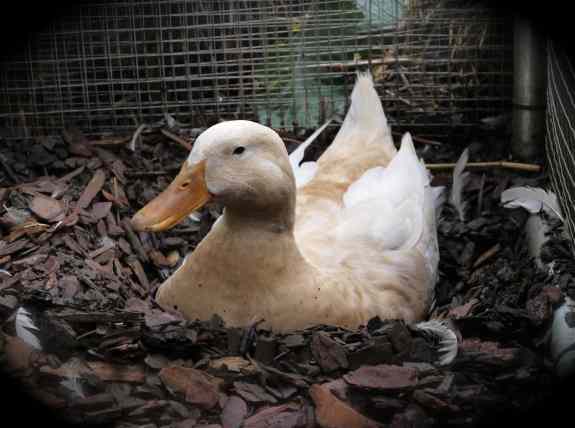
What? what? 🙂
Copyright 2015, Lori Fontanes
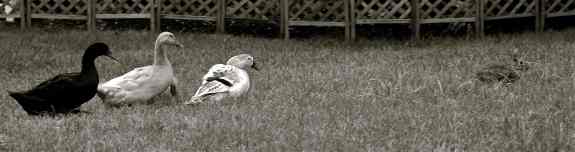 Two minutes of funny at Duck Duck No Goose. Follow us!
Copyright 2015, Lori Fontanes


 What the Ducks!